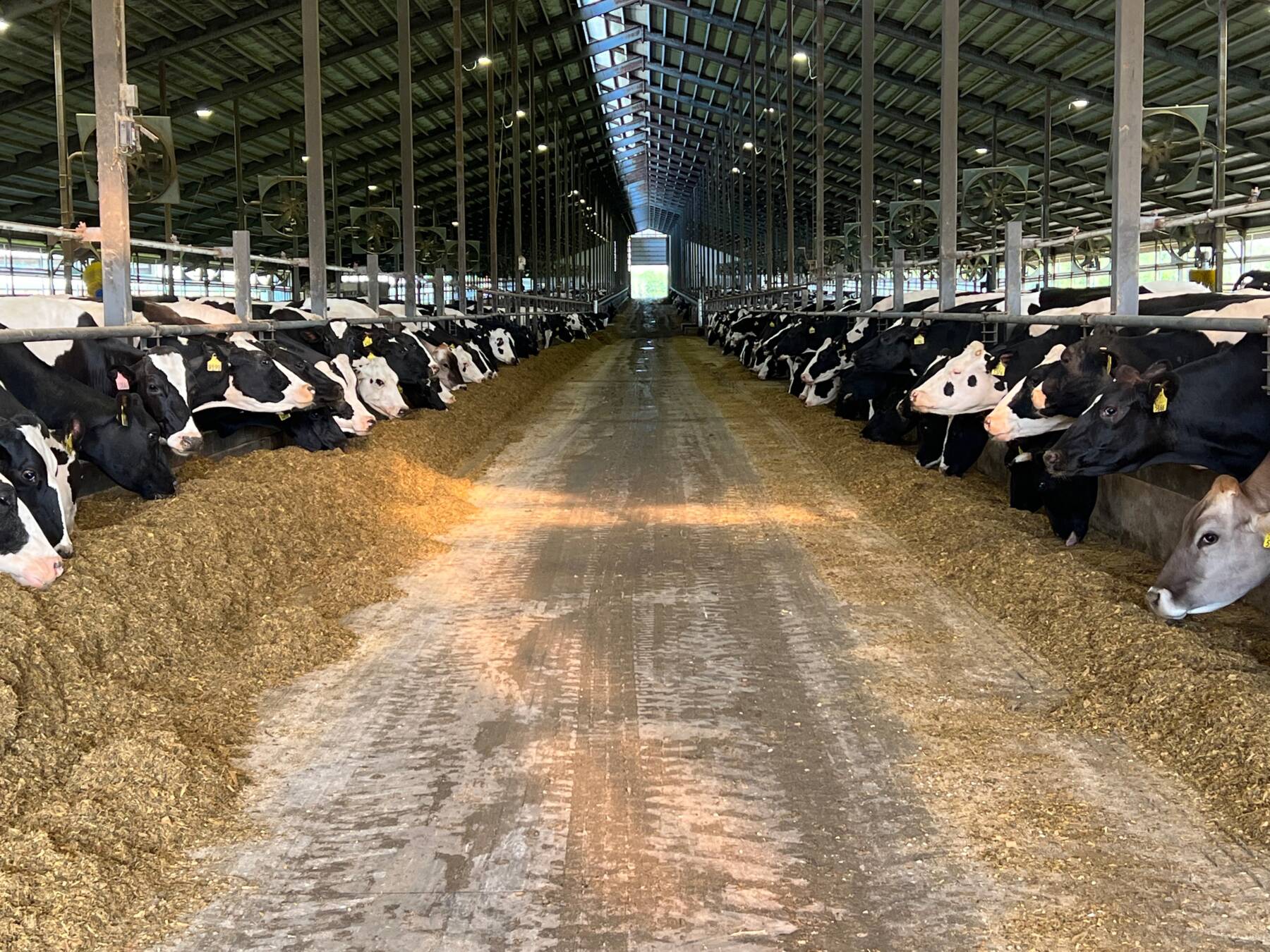
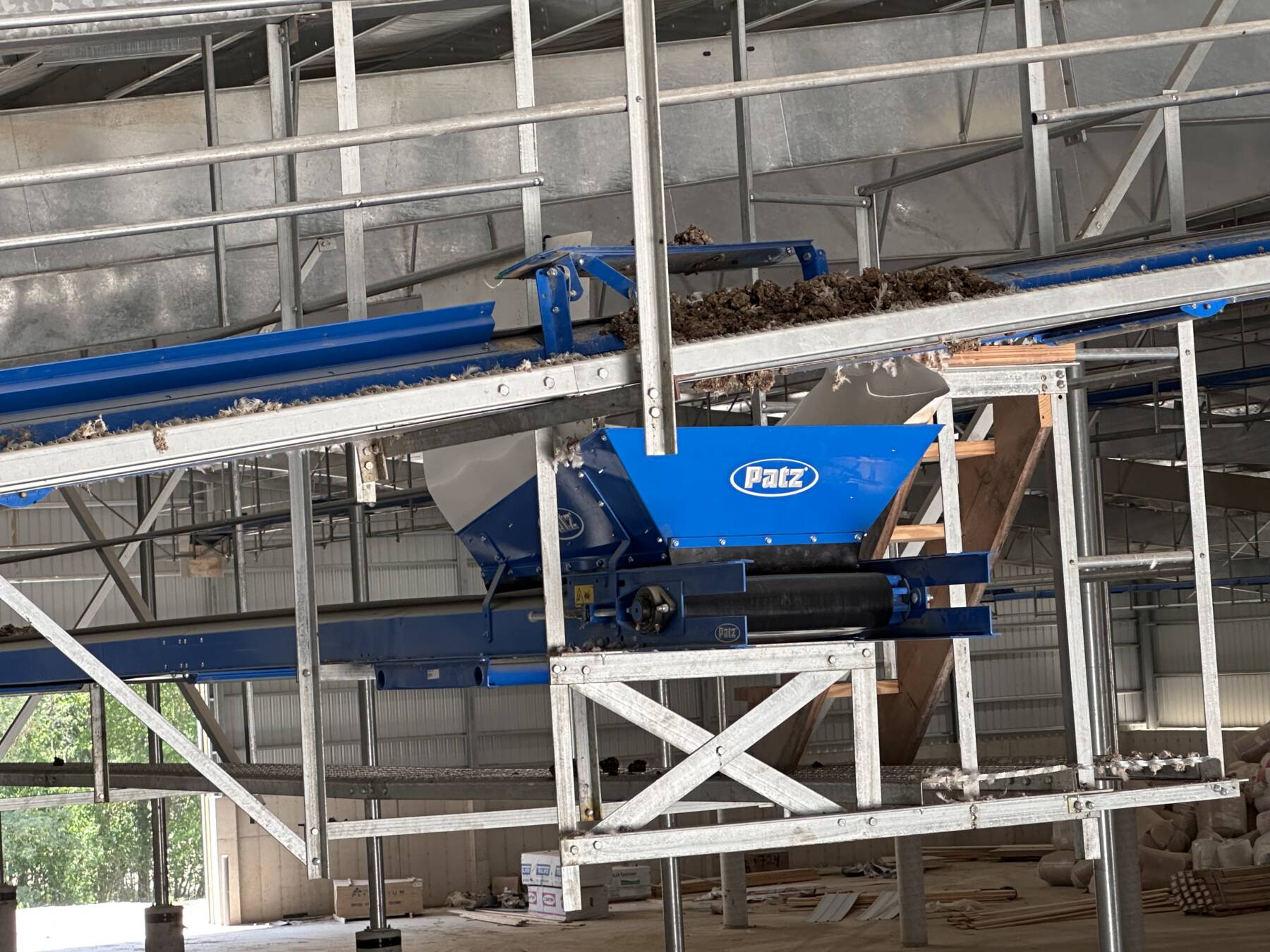
4 BENEFITS OF CONVEYOR SYSTEMS FOR REMOVING POULTRY LITTER
Using a conveyor system to move poultry litter from barns to storage facilities provides several advantages. Here are four benefits to note:
BENEFIT #1: Improved Air Quality & Bird Health
 One of the biggest concerns in poultry houses is ammonia. This strong scented gas is created by the chemical breakdown of bird fecal matter. When ammonia builds-up, it can affect the health of birds as well as humans. Ammonia can irritate and/or damage the mucous membrane resulting in watery eyes, coughing, difficulty breathing, and damage to the trachea’s cilia. Birds can become more susceptible to disease and infections when their systems are compromised.
To create a healthier environment for the flock and workers, ammonia levels need to be managed. To lower ammonia concentrations, litter needs to be removed from the barn in a consistent and timely manner. Even though ammonia gas will continue to be released from a storage pile, it is being managed by removing it from the confines of the barn and into a storage area with greater ventilation. The improved air quality will increase the flock’s survival rate and nurture their growth.
Conveyors move material fast and are flexible. By continuously removing litter, manure, feathers, and feed scraps, the air quality in the barn is improved, ammonia is reduced, and pathogen build-up under floors is effectively managed.
BENEFIT #2: Enhanced Biosecurity & Hygiene
A clean environment for birds and workers is necessary for a successful operation, and it starts with having a biosecurity plan. Biosecurity is a set of practices and policies designed to prevent the introduction and spread of harmful bacteria, diseases, pests, invasive species, etc. For poultry operations this means taking measures to keep diseases away from the animals, property, and people.
Disease prevention and material containment are two ways to improve biosecurity. Human contact with waste is largely responsible for disease transmission. Utilizing conveyors in litter handling minimizes the human touch and therefore, can lower the risk of spreading diseases.
Dedicated conveyors for removing litter helps to contain the material and maintain cleaner production environments, reducing the risk of viral and bacterial contamination.
BENEFIT #3: Labor & Cost Reductions
Using conveyors to transport litter from barn to storage area saves time and money. It’s a smart move to automate this part of the process. Eliminating the need for manpower to manually shovel and haul litter allows the use of labor to be redistributed. Instead of performing repetitive and physically demanding work, employees can be assigned to higher-priority tasks.
In addition to better use of your crew’s time, conveyors also minimize workplace injuries. Physical strains and injuries happen doing demanding and monotonous work. By having the conveyor do the work for you, employees do not have to perform the exhausting work. When a safer working environment is created, job satisfaction and employee morale may increase too.
Let conveyors do the heavy lifting and save on labor costs and workplace injuries.
BENEFIT #4: Waste Management
 When materials are in a centralized location, they are easier to manage. Conveyors efficiently collect and transport litter away from the barn to a storage facility. Once there, it can be efficiently controlled. Fresh manure is valuable for its high nutrient values. For this reason, it’s commonly used in fertilizer.
IN CONCLUSION
Conveyors can move materials efficiently and quickly. Because of these characteristics, conveyors are very beneficial to poultry operation. They help to improve air quality & bird health, save time and money on labor, improve biosecurity with minimal human contact, and can move litter to a central location where it can be managed.