

THE ORIGINAL SUPERFOOD: WHOLE MILK RECLAIMS THE MILK AISLE
Amidst all the clutter in the milk aisle, whole milk is shining through and reclaiming its status as the healthy, nutrient-dense whole food that it is. Before we dive into how milk does the body good, let’s look at a few terms.
What is REAL MILK? And what is WHOLE MILK?
 Simply put, Real Milk is real. It’s milk that comes from cows. The most common Real Milk options are Whole, 2%, 1%, and Skim. The percentage of milk fat is the differentiator between the real milk options. Whole milk is real milk that contains 3.25% milk fat. This is milk in its purest form – there are no additives or artificial thickeners added to it. Whole milk is the most flavorful of Real Milk options and has a rich, creamy texture. Real Milk is NOT plant-based alternative milk, such as soy, almond, oat, etc.
IT’S GOOD FOR YOU
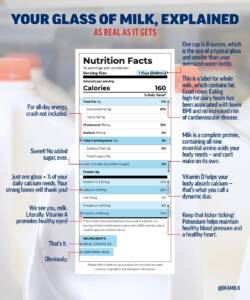
Milk is a nutritious beverage that provides several health benefits. One serving of this cool and creamy beverage provides over 10 essential vitamins and nutrients that contribute to overall wellness. Milk is undeniably a healthy choice with it’s wealth of nutrients. Here’s a partial list of properties:
- Protein
- Fat
- Calcium
- Vitamin D
- Riboflavin (B2)
- Vitamin B12
- Potassium
- Phosphorus
- Selenium
- Vitamin A
- Magnesium
- Zinc
- Thiamine
There’s a long list of essential nutrients in milk that fuel nearly every system and function in your body. Each nutrient plays an important role. When they interact, your body absorbs and uses them more effectively than any single nutrient alone.
WHAT ARE THE BENEFITS?
While not inclusive, here are 3 benefits of wholemilk to highlight:
BONE HEALTH.
When you hear the word calcium, what pops to mind? For many, it’s a tall glass of milk. Drinking milk has long been associated with calcium and healthy bones. From the list above, we learned that milk is a great source for calcium, Vitamin D, and other nutrients. The calcium in milk is beneficial for strong bones and teeth. The Vitamin D helps to absorb the calcium in milk. Together, they help to build and maintain strong bones and teeth.
The majority of Americans get their calcium from milk and other dairy products. The nutrients received from milk and other dairy products are important for people of all ages: From children who are growing and developing bones to older adults focused on retaining their bone mass. Milk promotes healthy aging and helps to minimize or prevent bone loss and the onset osteoporosis and osteopenia.
Fun fact: 99% of your body’s calcium is stored in your bones and teeth.
MUSCLE GROWTH & REPAIR.
 A superpower found in milk is protein. If you scan the grocery store aisles, you’ll see that there’s been an explosion of new “protein” products. Protein products are hot right now. A great source of protein from a pure, wholesome food is real milk.
Real Milk is considered a “complete protein,” meaning it contains the 9 essential amino acids necessary for your body to function at an optimal level. Complete proteins support lean body mass by helping to build and repair muscle tissue. After a strenuous workout, reach for a glass of milk. The high-quality protein and essential nutrients will help to speed recovery and reduce soreness.
WEIGHT MANAGEMENT
Are you looking to maintain a healthy weight or drop a few pounds? Milk or dairy may be able to help support those goals.
Milk and dairy, high in protein and fat, slows down your digestion and gives the feeling of fullness. Satiety hormones are released when milk or dairy is consumed. This in turn sends a message to your brain that you are full. With higher satiety, this natural full feeling reduces the urge to snack on refined sugars and carbohydrates.
CAPPING IT OFF
 From grade schools to the White House, whole milk is reclaiming its status as one of the most least processed, most naturally nutrient dense beverage option available. It’s time to look past old dietary myths and embrace the health benefits of real, full fat milk and dairy.