Tires Carry the Load
Practice Proper Tire Maintenance to Extend their Life (Rev. Nov 2026)
Do you have the right tire for carrying your load? Running tires at the proper inflation pressure extends the life of the tire, improves safety, and maximizes fuel and operational efficiency.
Before putting equipment to work, familiarize yourself with its tires. Learn the recommended load weight, the maximum speed, tire pressure, and what tools are needed for doing repairs. If tires aren’t suited for the application, weight, or speed, running outside of these parameters will inflict damage and eventually failure.
Tire specifications are not universal and will differ between manufacturers and between tires. Patz recommends that you read your owner’s manual and keep it handy for reference.
Follow this inspection checklist for all tires – mixer and tractor – to minimize downtime and protect your investment year-round.
CHECK TIRE PRESSURE. Inflation pressure has the biggest impact on tire performance. It can affect pulling power, traction, ride quality, and soil compaction. It is estimated that an underinflated tire – even just by 10% below the recommended level – can reduce tire life up to 15%.
- Use calibrated gauge. The best practice is to check pressure when tires are “cold” or have not been running for a significant amount of time.
- Adjust for the season. Tire pressure drops by 1 – 2 PSI (approx.) for every 10°F drop in outside temperature.
- Keep the air dry. Water trapped inside an air line can freeze the valve core, causing it to stick open and deflate the tire.
CHECK TIRE SIDEWALLS & TREADS
- Sidewalls. Look for anything abnormal – cracks, bulges, cuts, and other visible damage. Freezing temperatures make rubber stiffer, more brittle and more susceptible to cold weather cracking. Note: If a flat tire is severely frozen, do not try to inflate it until it has warmed up.
- Treads. If there is less than 20% tread left, consider replacing tires. The performance of tires with subpar treads is reduced when driving on snow and ice. Excessive or uneven treadwear can provide insight as to whether tire is over or under inflated. Check tire tread area for exposed cords and stubble damage.
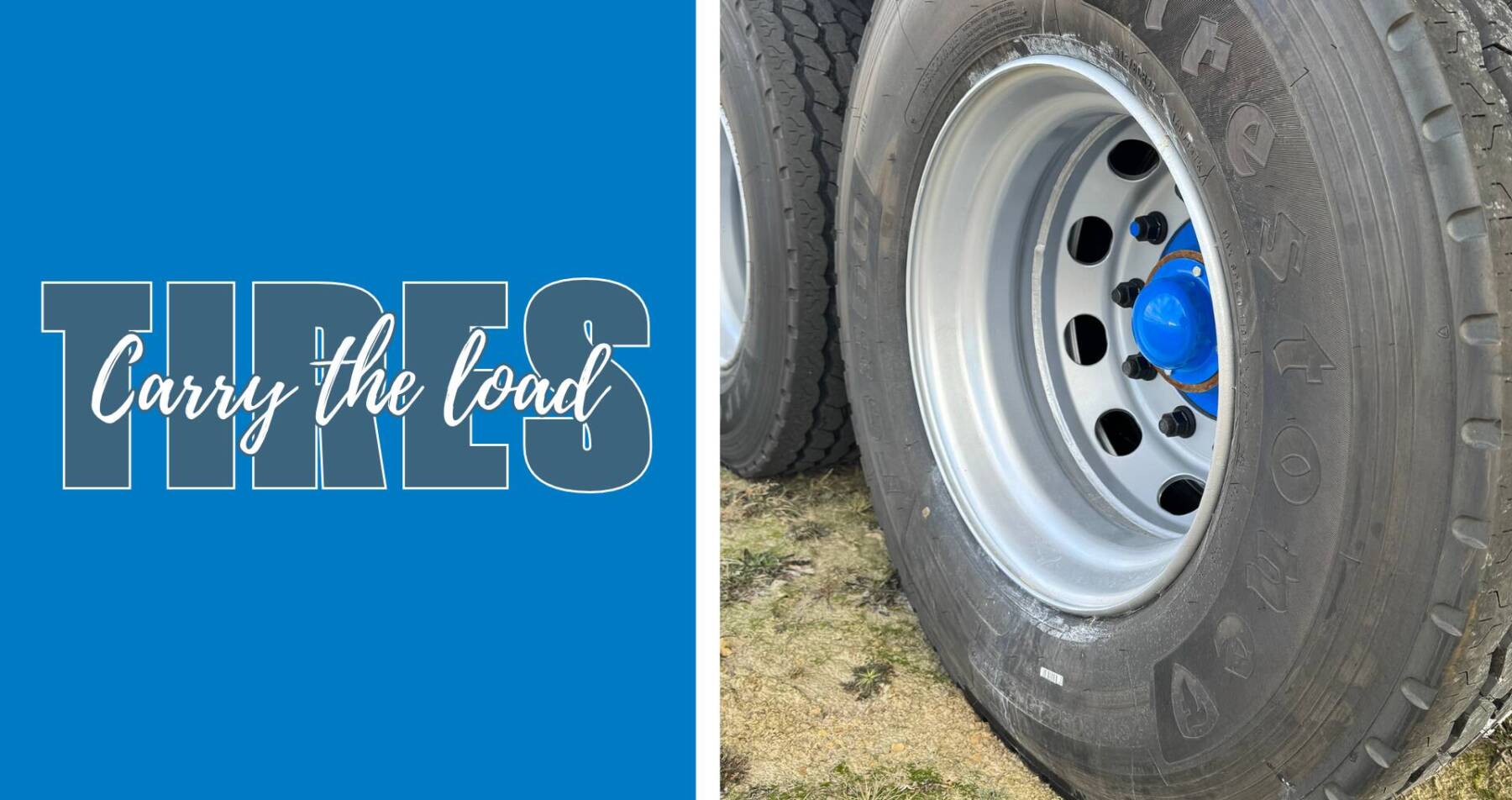
CLEAR THE RIMS, BEADS & DUALS. Look under the rim – where the rim meets the bead. Stubble, rocks, dried mud, and debris can get up there and damage the inner sidewalls or get wedged in the bead. If running duals or triples, be sure to look between the tires. In winter, wet snow and slush packed into the rim or wedged between duals and triples can freeze solid overnight, chafing sidewalls or unseating the bead. Make a habit of clearing packed snow and mud at the end of each shift.
CHECK VALVE STEMS, BALLAST & HARDWARE
- Valve stems & caps. Inspect stems for cracks, debris, and corrosion—especially if your tractor uses liquid ballast like calcium chloride. Ensure metal or heavy-duty valve caps are clean and screwed on tightly to keep moisture and ice out.
- Ground contact & hardware. Check the ground contact area to verify there is no gap between the lugs and the ground. Check all lug nuts and bolts to ensure they are tightened to spec.
The goal of performing routine tire inspections is to spot and remedy potential problems before they cause costly downtimes. Be proactive and take ownership of your equipment. Inspecting tires daily can keep your operation running smoothly and minimize breakdowns.